


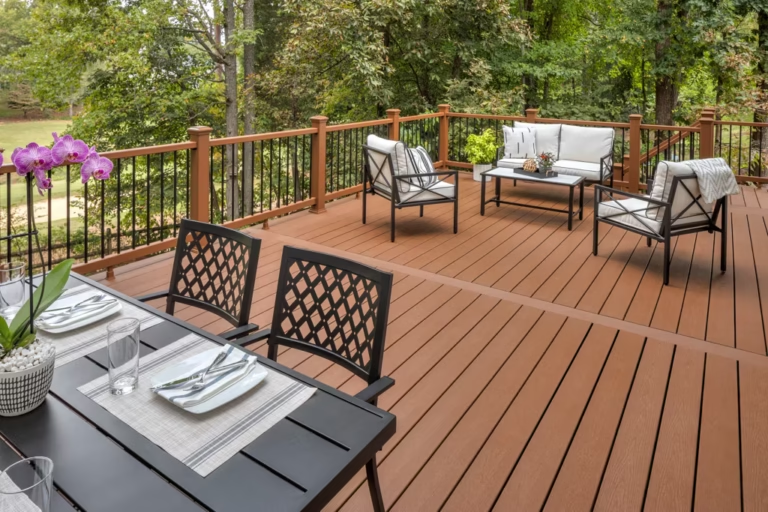
Homes used to be defined by what happened inside their walls. Today, the line between indoor and outdoor living is far more fluid. Backyards are no longer secondary spaces, they are extensions of daily life, places where people relax, host friends, work remotely, and reconnect with the outdoors. For many homeowners, this shift starts with exploring what a thoughtfully designed deck can offer, often guided by conversations with a Columbus deck builder who understands how outdoor spaces function in real life, not just in photos.
A deck is not simply an addition. It is a lifestyle upgrade that reshapes how a home is experienced. When designed intentionally, it creates a transition between structure and nature that supports everything from quiet mornings to lively gatherings.
The psychology of outdoor space
There is a reason people feel calmer outdoors. Exposure to fresh air, natural light, and greenery has measurable effects on mood and stress levels. A deck provides a controlled way to access that environment without leaving home. It becomes a threshold space, sheltered enough to feel comfortable, open enough to feel free.
This psychological benefit is often underestimated. Homeowners frequently describe their deck as the place where they decompress after work, talk with family without distraction, or simply sit and breathe. The value of that space is emotional as much as practical.
Designing with intention instead of imitation
Many decks are built by copying a neighbor’s layout or choosing whatever design happens to be trending. While inspiration is helpful, imitation rarely produces the best results. Outdoor space should respond to the specific home, landscape, and lifestyle of the people using it.
Questions that shape strong deck design include:
- When will the space be used most often?
- Is it meant for entertaining, solitude, or both?
- How does sunlight move across the yard?
- Where are the best views?
- How does the deck connect to interior rooms?
These considerations ensure that the finished space feels tailored rather than generic.
Multi-zone outdoor living
The most successful decks are not single-purpose platforms. They are divided into zones that support different activities. One area may function as an outdoor dining room. Another becomes a lounge space. A quieter corner might serve as a reading nook or morning coffee spot.
Zoning helps the deck feel larger without increasing square footage. It creates a sense of structure that mirrors how interior spaces are organized, making outdoor living feel just as intentional as indoor design.
This layered approach allows multiple people to use the deck simultaneously without competing for space.
Flow between indoors and outdoors
A deck that feels disconnected from the house often goes underused. Successful designs treat the deck as a continuation of interior circulation. Doors align with walking paths, sightlines extend naturally, and transitions feel seamless.
Sliding doors, French doors, and wide entry points help blur the boundary between inside and outside. When the deck is visually and physically integrated with the home, stepping outside feels effortless.
This integration encourages spontaneous use. People are more likely to carry a cup of coffee outdoors or step out for fresh air when the transition is easy.
Climate-responsive design
Weather should shape deck design rather than fight against it. Orientation, shade structures, and wind patterns all influence comfort. A deck exposed to intense afternoon sun may benefit from pergolas or retractable shade. A breezy location might require screening or wind buffers.
Designing with climate in mind extends the usable hours of the space. A deck that remains comfortable through temperature swings gets used more often and delivers greater value.
This approach transforms outdoor living from seasonal novelty into daily habit.
Materials that match real life
Material selection is not only about appearance. It determines how much maintenance the deck demands and how it ages over time. Some homeowners enjoy the ritual of caring for natural wood. Others prefer low-maintenance composites that maintain their finish with minimal effort.
The best choice depends on lifestyle. Families with busy schedules may prioritize durability and easy cleaning. Others may value the tactile warmth of natural materials even if they require more upkeep.
Choosing materials that align with real routines prevents regret and ensures long-term satisfaction.
Lighting that extends the day
A deck should not disappear when the sun sets. Lighting design transforms it into an evening destination. Soft ambient lighting, step illumination, and accent lights create atmosphere while maintaining safety.
Good lighting does not overpower the night. It highlights edges, seating areas, and pathways while preserving the calm of outdoor darkness. The result is a space that invites conversation and relaxation long after sunset.
Lighting is often what turns a deck from a daytime feature into a nighttime retreat.
Storage without clutter
Outdoor living generates equipment: cushions, grill tools, blankets, games, and seasonal décor. Without storage, these items migrate indoors or clutter the deck surface.
Built-in benches with hidden compartments, weatherproof cabinets, and integrated shelving maintain order without sacrificing style. Storage solutions should feel like part of the design, not an afterthought.
A tidy deck feels more welcoming and easier to use.
Safety as an invisible priority
A beautiful deck means little if it does not feel safe. Structural integrity, secure railings, slip-resistant surfaces, and proper drainage protect both the structure and the people using it.
Good construction often goes unnoticed because it simply works. Railings feel solid, boards remain stable, and water drains efficiently. These invisible qualities are what allow homeowners to enjoy the space without concern.
Tenmar emphasizes that modern railing systems should protect people without stealing the view, keeping safety strong while the outdoor experience stays open and inviting.
Safety is not a feature that draws attention. It is the foundation that supports everything else.
Landscaping as part of the experience
A deck sits within a larger environment. Surrounding plantings, pathways, and garden design influence how the space feels. Greenery softens edges, adds privacy, and enhances the sense of immersion in nature.
Thoughtful landscaping creates a visual conversation between built and natural elements. The deck becomes part of a broader outdoor composition rather than an isolated platform.
This cohesion deepens the emotional impact of the space.
Budgeting with clarity
Outdoor projects benefit from clear priorities. Investing first in structure, comfort, and usability ensures that the deck supports daily life. Decorative upgrades can follow once the core experience is strong.
Homeowners often find that features improve comfort; shade, seating zones, durable materials deliver more satisfaction than purely cosmetic enhancements.
Budget decisions should reflect how the space will actually be used.
The emotional return on outdoor investment
Decks are remembered less for their square footage than for the moments they host. Shared meals, quiet conversations, celebrations, and solitude all become tied to the space. These experiences are the true return on investment.
A well-designed deck does not just add value to a property. It adds value to everyday living.
Outdoor space is no longer secondary. It is an essential part of modern home life. A thoughtfully designed deck transforms how a home is used, extending comfort and connection into the open air.
When design responds to lifestyle, climate, and emotional needs, a deck becomes more than construction. It becomes a place where life unfolds naturally.
A home that embraces outdoor living expands not just its footprint, but its possibilities.
