


The global video streaming market is projected to exceed $416 billion by 2030, driven by AVOD and hybrid models.
Since video streaming consumption is on the rise all over the world, the selection of an appropriate monetization model has turned into one of the distinguishing factors of platform success. Startups to enterprise-scale streaming systems.
Within businesses, AVOD vs. SVOD are increasingly being considered depending on the objectives of the revenue, the expectations of the users, and the technical capabilities of the business. Nevertheless, this is no longer a business decision but an engineering challenge with monetization.
Dynamic Ad Insertion (DAI) is the heart of ad-supported platforms since it is an advanced technology that allows the delivery of ads in real-time in a more personalized fashion, without disturbing the user experience. Additionally, modern app development for iOS must incorporate these ad-insertion capabilities seamlessly to ensure optimal performance and user satisfaction.
We will discuss the technical and strategic dissimilarities of AVOD and SVOD, and also discover how to assemble scalable ad-insertion engines of modern video apps in this article.
Understanding AVOD and SVOD: A Technical Overview
To understand the mechanism of these monetization models on a system level, it is necessary to first find out how the infrastructure works.
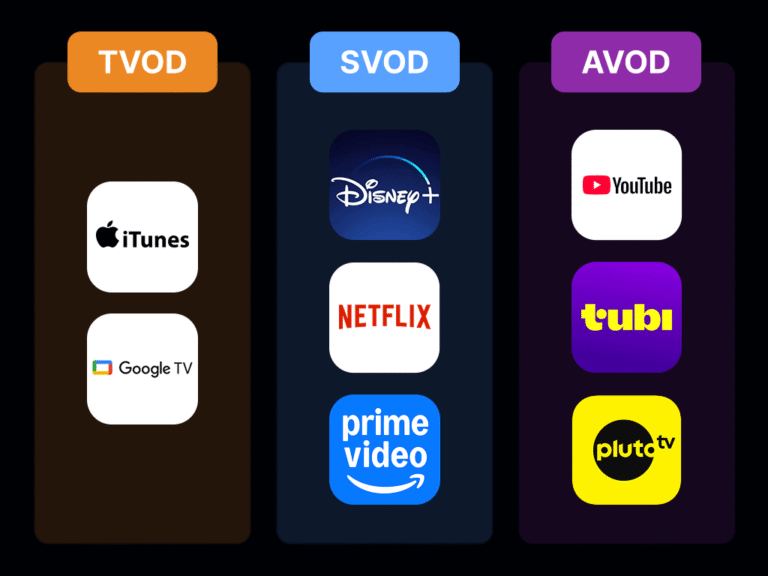
AVOD (Advertising-Based Video on Demand) is a technology that depends on advertisements as its main source of income. Content is available to users for free, and platforms are monetized through pre-roll or mid-roll, and post-roll advertising. This model requires a high level of ad-tech development, such as real-time bidding (RTB), audience segmentation, and ad decision servers.
Conversely, SVOD (Subscription-Based Video on Demand) is another type of revenue that produces predictable revenue through recurring subscriptions. Whereas it is technically less complex to monetize, SVOD needs a good DRM, entitlement management, and quality streaming output to warrant recurrent payment.
The controversies between AVOD and SVOD usually revolve around predictability of revenue and scalability, but the technical side of the story is also of primary importance.
Dynamic Ad Insertion: The Backbone of AVOD Platforms
The modern AVOD systems are characterized by Dynamic Ad Insertion, which is the difference between the old broadcasting systems and the new ones. In contrast to the static ads, DAI enables the insertion of ads on the server or client level in real time, depending on the user data and contextual indicators.
Key components of a DAI engine include:
- Ad Decision Server (ADS) for selecting relevant ads
- SSAI or CSAI pipelines for seamless playback
- User profiling systems powered by analytics and AI
- Content Delivery Networks (CDNs) optimized for ad stitching
Furthermore, sites constructed using mobile-first designs, particularly those that specialize in mobile application development in UK markets, should be in a position to be GDPR-compliant and at the same time not lose relevance of the ad. This brings another complexity to the engineering process.
Comparing Infrastructure Needs: AVOD vs. SVOD
Regarding development, AVOD infrastructure is much more complicated than the SVOD one.
AVOD platforms require:
- Real-time ad auctions
- Latency-optimized ad stitching
- Advanced analytics for impressions, CTRs, and CPMs
- Fault-tolerant playback mechanisms
- Meanwhile, SVOD platforms prioritize:
- Subscription lifecycle management
- Payment gateway integrations
- DRM and content protection
- Consistent streaming quality across devices
With that said, these days, numerous hybrid platforms combine both of these models, and thus, AVOD/SVOD is not so much a binary decision but a spectrum.
Mobile video consumption will account for nearly 75% of total video streaming traffic globally by 2029.
Building Video Apps for iOS and Beyond
iOS app development has its own challenges and opportunities when it comes to the creation of high-quality video experiences. Apple has a rigid privacy policy that has a direct impact on ad tracking, targeting, and attribution components of the ecosystem.
For AVOD-based iOS apps, developers must:
- Implement Apple-compliant tracking frameworks
- Optimize SSAI to avoid ad blockers
- Ensure low-latency playback on Apple devices
Conversely, SVOD apps have the advantage of being able to use the in-app purchase system of Apple but need to provide an outstanding UX to reduce churn. Scalable backend architecture and modular monetization logic are not an option in either case.
Choosing the Right Model for Long-Term Growth
The choice of AVOD or SVOD should be based on the type of content, the demographic of the audience, and the maturity of the market. AVOD is favored more in emerging markets since willingness to pay is lower, and the premium content ecosystems are more inclined towards SVOD.
But technically, in terms of growth, platforms that invest in flexible engines of monetization have a competitive advantage. Adaptability is the difference between success and failure, regardless of dealing with enterprise clients or startups venturing into mobile app development in UK.
“Advertising-funded streaming represents the next evolution of scalable media monetization powered by data, automation, and intelligent infrastructure.” – Sundar Pichai, CEO of Google
Wrapping It Up!
The AVOD/SVOD debate is ultimately way beyond price models. It has to do with creating strong, scalable, and intelligent systems that are capable of adapting to the behavior of their users and the demands of the market. Dynamic Ad Insertion will enable AVOD businesses to compete with subscription giants, but the SVOD will remain successful on exclusivity and high-quality delivery.
Through strategy alignment on monetization, and particularly both iOS and mobile ecosystems, video platforms can realize multi-year revenue creation and also provide smooth viewing experiences. The future lies with the ones who put monetization into their structure, not as a throwaway, but as an ability.
