


You’ve just had planning permission approved for that home extension you’ve been dreaming about. Fantastic! Whether it’s a kitchen extension, extra bedroom, or a garden room, you’re probably focused on the exciting bits like layout and design. But here’s something that absolutely cannot be an afterthought: heating.
Getting the heating wrong in an extension is expensive to fix later. Worse, it means living with cold spots, wasted energy, or an overworked boiler that packs in earlier than it should. The good news? With proper planning, your extension can be just as warm and comfortable as the rest of your home. Modern options like smart radiators with programmable controls mean you can heat your new space efficiently without sending your energy bills through the roof.
This guide walks you through everything you need to know about heating a home extension, with a particular focus on getting your setup right.
Start With Your Existing Boiler Capacity
Before you do anything else, you need to know whether your current boiler can handle the additional load. This is the single most important question, and skipping it causes problems down the line.
Check these details:
- Find your boiler’s kilowatt (kW) output rating (usually on a sticker on the front or in the manual)
- Calculate how much heating your extension will need (more on this shortly)
- Add up what your existing system already uses
- See if there’s capacity left over
Most modern combi boilers range from 24kW to 35kW. Older systems might be smaller. If your current setup is already running flat out to heat your existing home, adding an extension will overload it.
Signs your boiler is already at capacity:
- Heating takes ages to warm up in winter
- Hot water runs cold when multiple taps are on
- The boiler is more than 10 to 15 years old
- Pressure drops regularly
If your boiler can’t cope, you’re looking at an upgrade before you can properly heat the extension. Factor this into your budget early. A new boiler costs £1,500 to £3,000 depending on the model, but trying to run an inadequate system costs more in the long run through inefficiency and eventual breakdown.
Calculate Your Extension’s Heating Requirements
You can’t just guess how much heat you’ll need. Undersizing leaves you shivering. Oversizing wastes money on equipment and running costs.
The calculation depends on several factors:
- Room dimensions: Length, width, and ceiling height determine volume
- Windows and doors: Glass loses heat faster than insulated walls
- External walls: More external walls mean more heat loss
- Insulation quality: Modern extensions should have excellent insulation
- Intended use: Bathrooms need more warmth than utility rooms
Quick BTU Calculation Method
British Thermal Units (BTUs) measure heat output. Here’s a simplified approach:
- Measure your room in cubic metres (length × width × height)
- Multiply by 150 for a well-insulated modern extension
- Add 10% for each external wall beyond one
- Add 20% if there are large windows or patio doors
Example: A 4m × 5m extension with 2.4m ceilings = 48 cubic metres 48 × 150 = 7,200 BTUs base requirement Two external walls + large bi-fold doors = add 30% Total needed: approximately 9,400 BTUs
Alternatively, use an online BTU calculator or consult a heating engineer for accuracy. Getting this right matters enormously.
Extending Your Central Heating System
Assuming your boiler has sufficient capacity, the next decision is how to connect your new heating to the existing system.
Running New Pipework
You’ll need to extend your heating pipes from the current system to the new space. This involves:
Key considerations:
- Where to branch off from existing pipework
- Pipe sizing (usually 15mm for individual units, 22mm for main runs)
- Route planning to avoid obstacles and minimise visible pipes
- Insulation for any pipes running through unheated spaces
Most extensions connect via the floor void or through walls. If your extension has underfloor heating in the rest of the house, you might run pipes beneath the new floor. For first-floor extensions, routing becomes trickier and might require some clever boxing in.
Professional installation is essential here. Incorrectly sized or poorly fitted pipes reduce efficiency and can cause airlocks, cold spots, or noisy systems. This isn’t a DIY job unless you’re a qualified plumber.
Balancing the System
When you add new heating to an existing system, you need to rebalance everything. This ensures even heat distribution throughout your home, not just the new bit.
Balancing involves adjusting the lockshield valves on each unit so water flows at the right rate. Too much flow to the extension starves the original rooms. Too little leaves your new space cold.
A heating engineer will rebalance as part of the installation, but it’s worth understanding this will happen. Don’t be surprised if they spend time adjusting valves throughout your house, not just in the extension.
Choosing the Right Type for Your Extension
Not all heating units are created equal. Your extension’s design, available wall space, and aesthetic preferences all influence what works best.
Panel Radiators (Traditional Choice)
These are the standard white panels you see in most UK homes. They’re affordable, reliable, and available in various sizes and outputs.
Advantages:
- Wide range of sizes and heat outputs
- Competitively priced
- Easy to source and install
- Proven reliability
Considerations:
- Take up wall space
- Can look utilitarian in modern extensions
- Need suitable wall mounting space
For straightforward extensions where budget matters and appearance isn’t the primary concern, panel options work perfectly well.
Designer and Vertical Models
Modern extensions often feature lots of glass and minimal wall space. Vertical designs solve this brilliantly.
Why vertical models work for extensions:
- Space efficiency: Tall and narrow designs fit beside patio doors or in tight corners
- Higher outputs: Can deliver substantial heat from a small footprint
- Contemporary aesthetics: Complement modern extension designs beautifully
- Feature potential: High-quality designs become architectural features, not afterthoughts
Anthracite, brushed steel, or minimalist white finishes blend seamlessly with contemporary interiors. They cost more than basic panels, but if you’ve spent money creating a stunning extension, the heating should match that quality.
Column Radiators
Traditional column styles have made a comeback, particularly in period properties or extensions designed to complement older homes.
These work well when:
- Your extension needs to match a period property’s character
- You want excellent heat output from classic styling
- Wall space allows for horizontal installation
- Budget stretches to mid-range pricing
Cast iron and steel column options deliver robust heat whilst maintaining period authenticity.
Low Surface Temperature (LST) Options
If your extension includes a nursery, playroom, or space used by elderly or vulnerable people, LST models prevent burns from hot surfaces.
They enclose the heating element in a protective casing that stays cool to touch whilst still warming the room effectively. Essential for certain applications, though they cost more and are bulkier than standard designs.
Placement Strategy for Maximum Efficiency
Where you position your heating units dramatically affects comfort and efficiency. Get this wrong and you’ll waste energy whilst still feeling cold.
Best Practice Positioning
Under windows: This traditional placement isn’t just convention. Rising warm air counteracts cold draughts from the glass, preventing that uncomfortable chill you feel near large windows. For extensions with bi-fold or patio doors, this placement is particularly effective.
On external walls: Heat where the cold comes in. External walls lose warmth to the outside, so positioning heating there compensates for this loss and maintains even temperatures.
Away from furniture: Don’t block your heating with sofas, cabinets, or curtains. Blocked units work harder to heat the room, wasting energy and reducing comfort. Leave at least 10cm clearance around all sides.
Consider airflow: Heating works by convection (air circulation). Position units where air can flow freely around them. Corners or tucked-away spots reduce effectiveness.
What About Multiple Units?
Larger extensions might need more than one heating source. Two smaller units often work better than one large one, providing more even heat distribution.
Guidelines for multiple units:
- Space them evenly across the room
- Place one near the main cold source (big window/door)
- Ensure combined output matches your BTU calculation
- Consider separate thermostatic controls for different zones
Thermostatic Control for Extensions
Modern thermostatic radiator valves (TRVs) give you precise control over each room’s temperature. This is particularly valuable for extensions.
Why TRVs matter for extensions:
- Extensions often have different heating needs than older parts of your home
- Modern insulation means extensions heat up faster
- You can set lower temperatures when the space isn’t in use
- Prevents overheating in sunny garden rooms with lots of glass
Set your extension’s TRVs appropriately. A home office might want 19°C, whilst a playroom needs 21°C. Bathrooms typically want 22°C. Adjust to suit your actual usage patterns.
Smart TRVs take this further, allowing control via smartphone apps and learning your habits to optimise heating schedules automatically. The upfront cost pays back through reduced energy waste.
If you’re trying to keep running costs predictable, a quick free electricity bill check using Utility check can show whether your current bill looks typical, so you can sanity-check how much smarter heating schedules might move the needle.
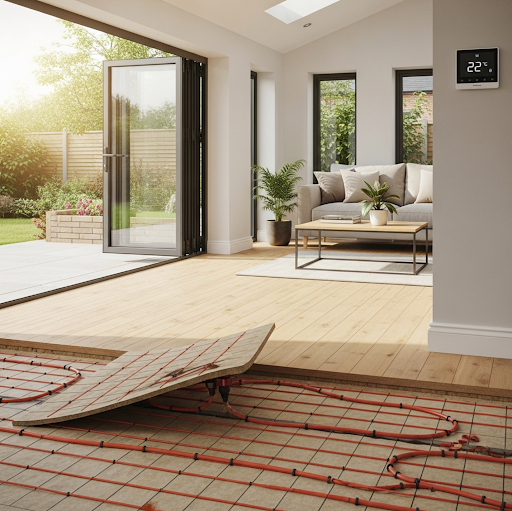
Underfloor Heating as an Alternative
While this guide focuses on traditional heating, it’s worth mentioning underfloor heating (UFH) as many extensions incorporate it.
Underfloor heating works brilliantly for extensions when:
- You’re laying new floors anyway
- The extension has large open-plan areas
- You want completely clear walls
- Budget allows (it costs more than traditional systems)
UFH can run alongside your existing heating, controlled separately. Many people use UFH for the main extension area with a traditional unit in a connected utility room or bathroom.
The two systems work perfectly together if properly designed. Just ensure your boiler has capacity for both.
Don’t Forget the Finishing Touches
Once the heavy work is done, these details ensure your heating performs optimally:
System flushing: New pipework introduces debris. A power flush cleans the entire system, preventing sludge buildup that reduces efficiency.
Inhibitor addition: Chemical inhibitor protects against corrosion and limescale, extending system life and maintaining performance.
Bleeding: Air trapped in new pipework reduces heat output. Bleed all units thoroughly after installation and recheck a week later.
Documentation: Keep records of what’s been installed, including model numbers, BTU ratings, and any warranty information. Future you will be grateful.
Common Mistakes to Avoid
Learning from others’ errors saves you money and hassle:
Mistake 1: Leaving heating to the last minute Plan heating early, ideally before building work starts. Last-minute decisions lead to compromised solutions.
Mistake 2: Choosing heating based purely on looks That stunning designer piece that’s utterly inadequate for your room size is a waste of money. Function first, then find something attractive that actually works.
Mistake 3: Ignoring professional advice Your builder’s mate’s cousin who “knows about heating” probably doesn’t. Use qualified heating engineers for design and installation.
Mistake 4: Skimping on insulation to save budget Proper insulation dramatically reduces heating requirements. Spending less on insulation means spending more on heating forever.
Mistake 5: Forgetting about future maintenance Ensure your heating units are accessible for bleeding, valve replacement, and eventual replacement. Don’t box yourself into a corner.
Getting heating right in your extension isn’t complicated, but it does require proper planning. Start with understanding your boiler’s capacity, calculate requirements accurately, choose appropriate equipment, and ensure professional installation.
The few hundred pounds you spend on getting expert advice and quality equipment pays back many times over through comfort, efficiency, and avoiding expensive remedial work.
Your extension should be a joy to use year-round, not a cold addition you avoid in winter. With thoughtful heating design, it becomes a warm, welcoming space that genuinely extends your living area rather than just your floor plan.
Take the time to plan properly, invest in quality equipment and installation, and you’ll enjoy comfortable, cost-effective heating for decades to come.
